Showing posts with label quotient. Show all posts

Tuesday, October 18, 2011

3.7 Operations on Functions 10/18/11

In this section, we looked at defining functions using various operations and combining multiple expressions using new methods.

First, we will take a look at the basic operations of functions: sum, difference, product, and quotient.

Sum:


---->  


Difference:

  ---->  


Caution: Remember to distribute the negative when inserting the g(x) expression.

Product:


  ---->


Quotient:


    ---->  


A sample of the sum method:


Find
Since this^^ = 
Then:


Next, we began to look into compositie functions.

The composite function   ° g  of two functions f  and g is defined by:

( ° g)(x) = f(g(x))


The domain of   ° is the set of all x in the domain such that g(x) is in the domain of f.

An example of a composite function problem:

Let  and 

( ° g)(x) 

( ° g)(x)

( ° g)(x)

( ° g)(x)

Domain problems are also common in this section, so be ready to find the domain of functions like we did in previous chapters.

Hope this helped!

-julia


Saturday, September 10, 2011

1.2- Exponents and Radicals

Yesterday we learned about the rules of exponents. These rules are as follows:
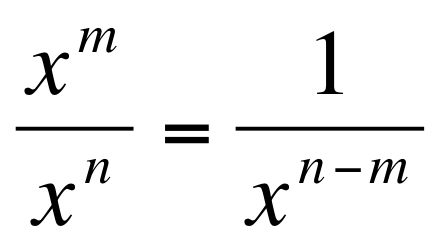
The quotient rule above is the example for when the larger exponent is in the numerator, but if the larger exponent is in the denominator you would put the base 'x' to the power of n-m all over one. That would look like this 

This next picture is an example of the work that lets you get from to , where .


We also learned how to change exponents into radicals and vice versa. But before I get into that I will go over the names of a radical's parts.
Now, I will go into making exponents into radicals, and radicals into exponents.
This shows where the exponent's numerator and denominator go when it's made into a radical.
This shows where the radical's index and the radicand's exponent go when it's made into an exponent.


The diagram below shows some examples of turning radicals into exponents:


Hope you like the post and sorry its so long.
Bye,
and Go Blue,
Alex Hackert